
From the Hermit’s Porch is a weekly reflection on the texture of real life — offered freely to anyone who feels at home in its musings. You can subscribe if you’d like these notes to meet you each week in your inbox.
I. When the Mind Collapses Inward
Most of us know this moment:
You open your email in the morning and see a message you weren’t expecting — a short reply, a delayed response, or no response at all. And before you’ve even taken a breath, something in you tightens. You start replaying what you wrote, wondering if you mis-stepped, imagining what they might be thinking. The world around you fades. Your mind becomes a small room with no windows.
It happens so quickly and so quietly that we mistake it for thinking. When something feels uncertain — even something small, like a quiet inbox or a strange look — the nervous system reacts first. The body registers “something’s off,” even though what or why hasn’t reached awareness yet.
That reaction is a narrowing of the field of attention, pulling the mind inward and shifting attention from a broad perceiving of the world to a tight review of what just happened — the thoughts, sensations, and interpretations that feel tied to who you believe yourself to be. Instead of seeing what’s in front of you, the mind starts combing through the moment, scanning for danger, trying to locate the misstep.
This is the brain’s first sorting mechanism — the ancient script that asks, “Is this a threat to me?” before anything else. If the signal is strong enough, that script takes over. The information never makes it far enough up the chain to reach the prefrontal cortex, the part of the brain responsible for reasoning, perspective, and meaning. The threat script has already claimed the moment.
I don’t want to get too deep into the scientific basis — that would take a book, and others are better-experienced to write it — but this is biology doing exactly what it was designed to do. The nervous system is built to protect us, and it doesn’t distinguish between kinds of threat. To the brain, “I might be judged” and “I might be in danger” light up many of the same pathways. The body reacts first, and the mind follows. The spotlight narrows. The field collapses. The world shrinks to the size of whatever feels unsafe.

II. Fragile Identity and the Loss of Depth
I’ve felt this pattern most clearly in my own writing life. I’ll publish something that feels honest and grounded, something I’ve taken care with, and then the response is quiet: no likes, no comments, no signals, not a whisper of anything. Just a kind of silence that feels like it’s saying, It’s not good enough. And almost immediately, my attention folds inward. Instead of standing in the truth of what I wrote, I start wondering whether I misread the moment or whether I should have said it differently. The desire to offer something real gets swallowed by the fear of how it might have been received.
What’s striking is how quickly that silence becomes personal. It’s not just “no one responded.” It becomes “what does this say about me?” And suddenly I’m unsure about my competence — my identity — as someone trying to communicate ideas that matter to me and that I believe matter for others. The uncertainty lands hard on the part of me that wants to feel seen, valued, and safe. And once it lands there, the mind starts working overtime, trying to steady something inside that suddenly feels shaky.
That’s what happens when identity feels threatened or unsteady. When I’m not sure how I’m being seen, or whether I’m okay in the eyes of others, the mind starts looking for reassurance. It replays conversations. It imagines judgments. It rehearses responses. It’s the default mode network in overdrive, looping through self‑referential thought. And this isn’t just me; this is a deeply human pattern, one many of us fall into, most often without even realizing it.
When the mind gets caught in that loop, it’s not just uncomfortable, it changes what we’re able to notice. All of our attention gets pulled inward, toward managing the uncertainty, toward trying to steady the part of us that suddenly feels exposed. And when attention is tied up like that, the world flattens. Nuance disappears. Curiosity disappears. The ability to take in what’s actually happening — the tone of a room, the texture of a moment, the presence of another person — all of that goes dim. The mind becomes preoccupied with protecting instead of perceiving the world.
And there’s something lost when that happens to us. Because what disappears in those moments is the very thing that makes life feel meaningful and spacious. The ability to sense what’s unfolding around us. The ability to feel connected outside of ourselves — to a place, a person, a moment, a truth. When those capacities go offline, we’re left with a narrow, self‑referential world that can’t hold anything larger than our own fear.
And that loss points directly to our capacity for depth. Not a mood or a virtue; but the mind’s route to a fuller, wider perception — the second stage of processing where meaning and connection can finally take shape. It depends on having enough internal space to register more than a perceived threat, or more precisely, more than our biological reaction to it. Depth asks for a field of attention wider than an unsettled identity can sustain. It needs spaciousness: room to think, quiet to listen, and the safety to look beyond oneself. None of that is possible when the self is centered on threat. It becomes possible only when the self is grounded in meaning and purpose.

III. The Possibility of a Grounded Self
Imagine a self that no longer braces. A self that wakes without the reflex to guard, that meets the world as it is rather than as we fear it might be. Its attention is not pulled inward by threat but drawn outward by curiosity. It has enough stability to let silence expand, enough purpose to let uncertainty be a companion instead of a danger. In such a self, depth isn’t an achievement; it’s the natural consequence of having room to see.
But a grounded self isn’t one that never feels the tremor of uncertainty. It isn’t a perfected version of us, or a self that has outgrown fear. A grounded self is simply one that can feel the pull of the threat script without being swept into it — a self that stays in contact with the world even as old patterns try to collapse attention. That contact begins with something small: the ability to notice what’s happening without immediately interpreting it as judgment or danger.
In that earlier example — the silence after sharing something vulnerable — the pause wouldn’t automatically become “I’m not good enough.” A moment of quiet wouldn’t instantly harden into “I said the wrong thing.” Instead of tightening around the uncertainty, the grounded self creates a little space inside it. Enough space to breathe. Enough space to stay oriented. Enough space to keep the attentional field from collapsing all the way down to the threat to the self.
This isn’t about confidence or false courage. It’s about contact. A grounded self stays connected to the moment as it is, not to the imagined verdict. It can feel discomfort without letting discomfort dictate meaning. It can sense the biological surge — the narrowing, the vigilance, the old protective circuitry — and still choose to remain present, to stay with what is actually happening rather than with what we wish was or wasn’t happening.
The capacity to choose is where depth begins. Not through force or effort, but through the steadiness that emerges when we anchor ourselves in something larger than identity. When the self is grounded, attention can widen. Nuance returns. Curiosity returns. The presence of another person becomes available again — not as a threat to manage, but as a reality we can actually meet.
And even in that widened state, fear doesn’t disappear. It still flickers at the edges, still sends its familiar signals. The difference is that the grounded self isn’t default-responding to those signals anymore. It has enough internal room to hold both the uncertainty and the world beyond it.
Groundedness isn’t a trait, a personality style or a stable temperament some people are born with and others aren’t. Groundedness is a practice — a way of relating to our own biology with less urgency and more honesty. It’s the ongoing work of noticing when the threat script begins to take over and choosing, even briefly, not to collapse into it. It’s the willingness to return to contact with the moment again and again, even when the body is pulling us toward old interpretations.
It’s a way of meeting the moment without abandoning ourselves or folding inward. A way of staying open long enough for depth to find us again.

IV. Presence as the Expression of Attentional Freedom
Once the self is no longer the center of vigilance, the mind can finally return to the world. This is the pivot point — the moment when groundedness turns into presence, when the self becomes steady enough that perception can widen and the world can come back into view.
Presence begins the moment the self stops being the object of constant monitoring. When identity isn’t under threat, attention is free from the constraints of self-protection and can move outward toward the world, toward meaning, toward what’s actually happening. The spotlight widens. The attentional field opens. The nervous system shifts from protection to perception. What was once a narrow, self‑referential loop becomes a spacious awareness capable of taking in nuance, texture, and relationship.
And this shift isn’t mystical. It’s neurological. When the threat script quiets, the brain’s reasoning and meaning‑making networks come back online. The prefrontal cortex regains access to context, perspective, and interpretation. The mind becomes capable of seeing clearly again. It can observe without defending. It can listen without bracing. It can respond without collapsing. Presence is simply what perception looks like when it’s no longer orbiting fear.
But presence is more than the absence of threat. It’s the return of contact — with the world, with others, with meaning itself. It’s the moment when the mind is spacious enough to be touched by what’s actually happening. When the world regains its depth and we regain our ability to participate in it. Presence is the felt sense of being here, not as a performance, but as a way of perceiving that becomes available when attention is free.
Presence isn’t something we manufacture. It’s something that emerges when the conditions are right — when the self is grounded enough that attention can widen, when vigilance softens enough that perception can return. Presence is the natural expression of a mind that is no longer captured by fear.
V. Bounded Presence: The Capacity to Notice, Redirect, and Remain Uncollapsed
The real work — the adult work — is learning to notice when the threat script has taken over. To feel the moment the field collapses. To sense when attention has narrowed back to the self. And then, gently, to redirect attention toward observation.
Not “Why is this happening to me?” But simply, “What is happening, here and now?”
This small shift can be an extraordinary change in experience. It quiets the default mode network. It steadies the breath. It widens the field. It brings the prefrontal cortex — the part of the brain that reasons, reflects, and makes meaning — back online. And in that widening, presence becomes possible again.
This is not bypassing. It’s not suppression. It’s not pretending everything is fine. It is the practice of returning attention to what is real rather than what is feared.
Bounded Presence is the capacity that makes all of this possible. It is the ability to stay steady enough that attention doesn’t collapse at every hint of threat. It is the ability to notice the collapse when it happens and gently widen the field of attention again. It is the ability to remain uncollapsed in a world that constantly pulls us toward self‑protection.
But Bounded Presence is not a trait. It isn’t something we are born with or something we “have.” It is something we practice — a way of relating to our own biology with steadiness instead of urgency. It grows through small, repeatable acts:
- Noticing the moment attention narrows. The tightening. The self‑referencing. The old script beginning to run.
- Interrupting the collapse. A breath. A pause. A shift from “me” to “what’s here.”
- Redirecting attention outward. To the room. To the other person. To the world as it is.
- Letting the field widen again. Not by force, but by allowing contact with reality to return.
This is how Bounded Presence is cultivated — through the repeated practice of returning to the world instead of disappearing into the self. Through learning to hold our internal experience without being consumed by it. Through choosing, again and again, to stay in relationship with what is real.
Bounded Presence is the boundary that protects attention. It is the quiet strength that keeps the self from collapsing inward. And over time, these small practices accumulate into a way of being — a steadier, wider, more grounded way of moving through the world.
VI. A Closing Image
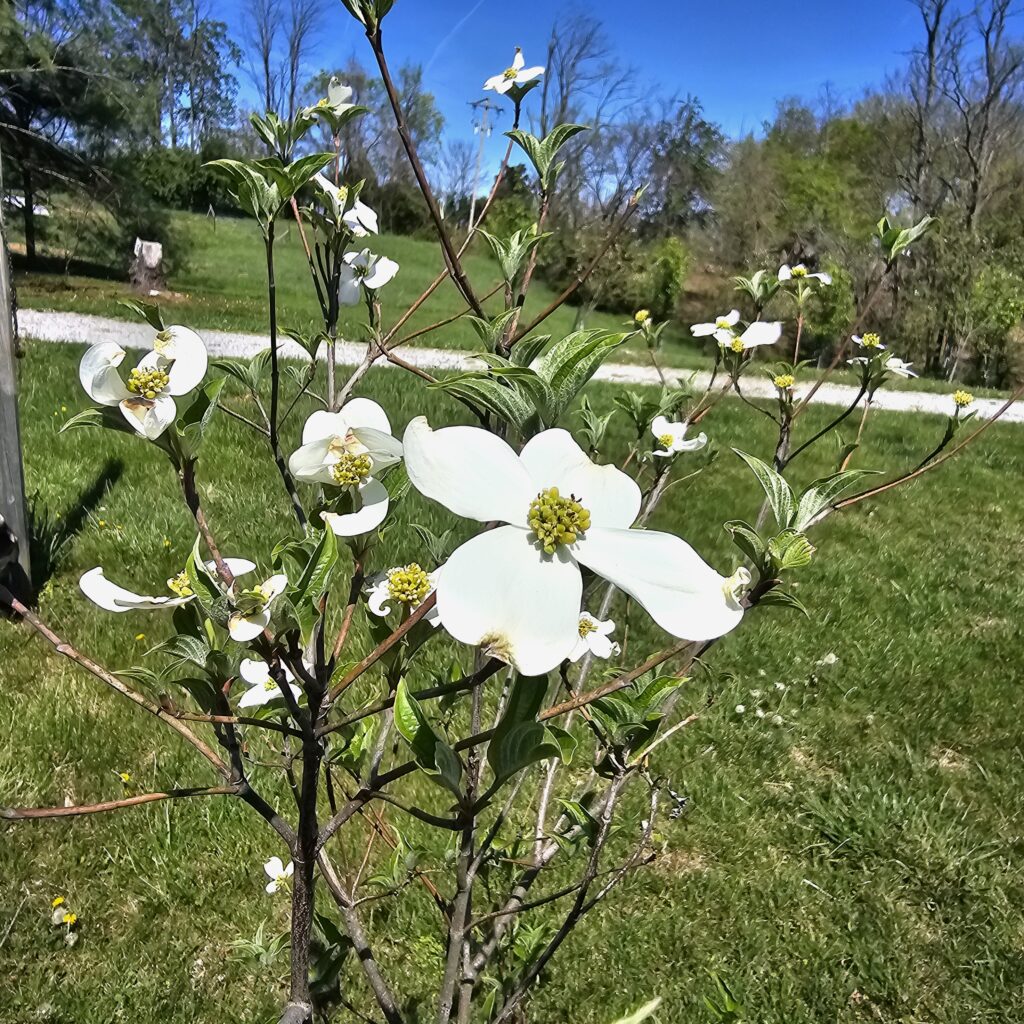
At the end of a long day, I walked the paths on the farm, just watching, no agenda. Nothing dramatic was happening. No insight. No revelation. Just the slow closing of the day. And for a moment, I felt the familiar tug of wondering if I was doing enough, being enough. But instead of collapsing into it, I noticed it. I let the thought come and go on its own. I returned my attention to the world in front of me — the light, the air, the quiet movement of wind and scent. And in that simple redirection, something softened. The field widened. Presence returned.
This is the work. Not perfection. Not performance. Just the steady practice of noticing the collapse and widening the field again.
Bounded Presence is how we learn to live from that wider field — not once, but over and over, until it becomes the way we move through the world.
And if you want to keep exploring this way of living — this widening, this returning, this practice of staying in contact with what’s real — the Wayward Haven offers a few paths to walk. Each one is an invitation to deepen the work: the Conditions for Living Well, the seasonal notes on our work around the farm, the quiet practices woven through the land itself. Choose any path that calls to you, or become a free subscriber or support our work as a Wayfarer. They all lead back to the same place: a steadier, more spacious way of being in the world.